
Keyword
Geoscientific information
60 record(s)
Type of resources
Topics
INSPIRE themes
Keywords
Contact for the resource
Provided by
Representation types
Update frequencies
Status
Scale
-
Delimitation of areas and identification of geological formations with potential for CO2 storage in mainland Portugal and its respective Exclusive Economic Zone (EEZ). The areas were obtained from a combination of historical data (mechanical oil exploration surveys and their geophysical logs and geophysical prospecting using the seismic reflection method), lithostratigraphic interpretation, requirements for storage in saline aquifers, as well as an update of the results of the COMET, CO2STOP and HYSTORIES projects, carried out in the framework of the CSA-GSEU project (WP3 Geoenergy, thematic subgroup CO2 and Hydrogen Storage).
-
-
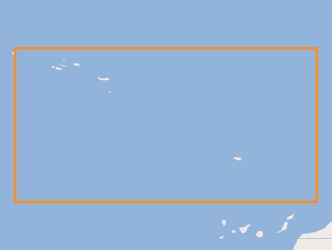
Volcanic centres in the Portuguese offshore, located between the Mid-Atlantic Rift zone (Azores archipelago) and the continental margin.
-
Database that stores and catalogues thin sections and polished surfaces, as well as the corresponding source samples, providing a valuable resource for the scientific community.
-
The Geothermal Atlas of Mainland Portugal is a mission-driven project of fundamental importance for the geothermal knowledge of the country, systematically carried out at the National Laboratory of Energy and Geology (LNEG) for over 30 years. It was created following other mapping projects, incorporating diverse information from various data sources obtained for different purposes, from different institutions, and harmonized and processed in a way that allows it to be applied to information, dissemination, training, promotion, and research on geoenergy in mainland Portugal, thus serving as a lever for the sector's development. It constitutes a dynamic and constantly updated research effort, integrating various parameters from diverse origins applicable to geoenergy studies. Its integrated and homogenized processing allows for a visualization of the country's geothermal characteristics on a national scale and can be used to determine geothermal potential at various scales. As sources of information for the production of geothermal mapping of mainland Portugal, processed and directed towards the various types of geothermal energy and geothermal exploitation, the first works began more than 40 years ago, forming the basis of Portuguese contributions to successive European Atlases of Geothermal Resources, the last of which was published in paper in 2002 with updates published in 2025 in the European Geological Data Infrastructure. This information is constantly complemented by additional geothermal information, whose original acquisition was made for geothermal purposes, and also by information acquired for other geoscientific objectives. The incorporation of information is done according to established criteria.
-
-
Stratigraphic and structural model of the Neves-Corvo Region produced in the framework of the SMART EXPLORATION Project, based on geological, geophysical and drill hole data. It has three stratigraphic surfaces: Base of Mértola Formation, Top of Phylite Quartzite Formation, and in the Neves-Corvo mine region, the contact between the upper and lower Volcanic Sedimentary Complex is available.
-
-
This map was developed to integrate the 2nd version of the PNS - Portuguese Natural Stones - Portal. It contains points, which correspond to the geographic coordinates (central) of the quarrying site(s) where the natural stones included in PNS Portal are quarried. Selecting each point on the map allows access to a table, which includes: - stone code on the PNS Portal; - main commercial names; - stone type; - petrological family; - geographic coordinates (EPSG 4326); - link to the stone’s Technical Sheet, on the PNS Portal.
-
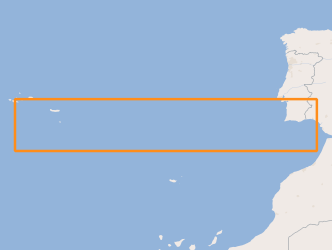
Areas that evidence the occurrence of submarine landslides, located between the Middle Atlantic Rift zone (Azores archipelago) and the Continental margin.